Our approach to sustainability is about delivering impact faster with more focused, urgent and systemic action across our big four sustainability priorities: Climate, Nature, Plastics and Livelihoods.
This page provides an overview of the actions we're taking on nature. Keep scrolling to learn more.
Our approach to nature
Our approach to nature
The world – and our business – depends on resilient natural and agricultural ecosystems to thrive.
Restoring and regenerating nature is also one of the most powerful tools in addressing climate change, reversing biodiversity loss and improving livelihoods.
A business-critical resource
A business-critical resource
We depend on the natural world across our value chain.
The loss of biodiversity, degradation of soil, and increasing water scarcity pose increasing challenges for our business and the people we work with.
We have an opportunity to help protect and regenerate nature, within and beyond our business, to improve our own resilience and that of our supply chain.
Unilever's Nature targets
Resilient and regenerative natural and agricultural ecosystems
95% volume of key crops to be verified as sustainably sourced by 2030
Implement regenerative agriculture practices on 1 million hectares of agricultural land by 2030
Help protect and restore 1 million hectares of natural ecosystems by 2030
Maintain no deforestation across our primary deforestation-linked commodities
Implement water stewardship programmes in 100 locations in water-stressed areas by 2030

Unilever Climate & Nature Fund
Unilever has committed to investing €1 billion by 2030 into climate, nature, and resource efficiency projects through our Climate & Nature Fund.
Sustainability at the core of sourcing
Sustainable sourcing is at the root of agricultural resilience, a more stable and efficient food supply chain and our sustainability strategy. For more than 150 years, at Unilever, we’ve been working with suppliers and farmers to buy sustainably grown crops.
In 2024, Unilever raised the benchmark with the release of updated Sustainable Agricultural Principles (SAP) (PDF 5.01 MB), which underpin our programme. As set out in the SAP, we verify our key crops as sustainable using a range of widely recognised benchmarked certification programmes and standards.
Growing regenerative agriculture
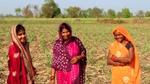
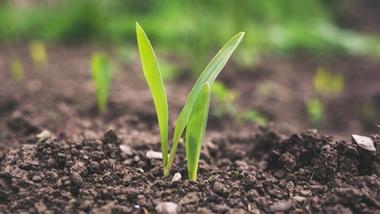
We’re working to bring our Regenerative Agriculture Principles (PDF 8.34 MB) to life. This means supporting farmers and suppliers as they establish practices like cover cropping and crop rotation, reducing tillage and using natural alternatives to synthetic fertilisers.
At HUL, we work closely with smallholder farmers and ensure that they receive training and adopt good agricultural practices, resulting in significantly higher yields and better returns. We also provide these farmers with an assured market for their produce. In 2024, we stepped up our actions to protect and regenerate natural ecosystems associated with our sourcing locations. To facilitate the adoption of regenerative agricultural practices by farmers, we carried out several workshops throughout the year.
61,000 Ha+ of land under regenerative agricultural practices across our Value chain.[a]
Maintaining deforestation-free sourcing

Sustainable fruits and vegetables
Working closely with numerous smallholder farmers, we ensure they receive training and adopt good agricultural practices, resulting in significantly higher yields and better returns. HUL provides these farmers with an assured market for their produce. We are actively promoting sustainable agriculture by engaging with over 1.5 lakh+ smallholder farmers in the tea, chicory, and tomato supply chain. Furthermore, Unilever played a key role in establishing the Sustainable Agriculture Initiative Platform to foster collaboration and set common standards among FMCG companies sharing suppliers.
Partnering for impact
Furthering our impact to deliver resilient and regenerative natural and agricultural ecosystems, we have collaborated with Sahyadri Farms, India's largest Farmer Producer Organisation, a pivotal tomato paste supplier and a contract manufacturer for HUL.
We are spearheading a transformative project to fortify the sustainability and resilience of the tomato value chain in Maharashtra's Nashik district. The program is dedicated to decarbonising the tomato value chain, specifically emphasising our brand Kissan ketchup.
This project identifies key areas for agricultural improvement, focusing on regenerative practices, farmer training, capacity building, sustainable incentives, and optimised resource use through partnerships. A robust MRV system ensures measurable impact, with expected reductions in tomato GHG emissions and increased yields for more than 3,000+ smallholder farmers. Farmers are being trained to sustain these practices, benefitting both the environment and livelihoods.
The partnership is meticulously poised to yield substantial returns, not just in financial terms but also in contributing positively to the environment. Our collaborative efforts with Sahyadri Farms serve as a testament to our commitment to instigating impactful and sustainable change in the Indian agricultural landscape.
HUL is actively promoting sustainable agriculture with smallholder farmers growing tomatoes by integrating sustainable practices, specifically covering key areas like soil and nutrient management, water management, environment management, biodiversity conservation and integrated pest management.
A sip of sustainable and deforestation-free tea
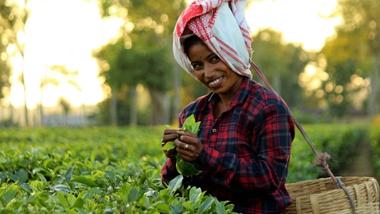
Tea plays a crucial role in achieving a deforestation-free supply chain. By increasing certified tea purchases, we can ensure traceability back to farmers, helping us monitor sourcing from plantations to factories. This also helps us support smallholder farmers in sustainable tea practices, improving farmer welfare and obtaining sustainable tea certification.
Visibility to the farmer is also a prerequisite to understanding the social setting and how we can intervene to bring positive change in the supply chain. We help smallholders implement sustainable practices in their tea businesses, improve welfare for workers, and support farmers in proceeding to certification if they wish. Investing in smallholder farmers, who are responsible for more than 54% of India's tea production, is one way we can empower communities to grow sustainably and care for land and soil.
86% of all our tea is sustainably sourced and certified[a]
trustea
Our commitment to sustainable tea has been long-standing. We buy tea certified from trustea[b], of which we are a co-founder and co-funder, and the Rainforest Alliance. Both these standards align with our deforestation-free commitment, with checks against satellite imagery. For large uncertified tea estates, we conducted a geospatial analysis and found a negligible risk of commodity-driven deforestation. Through our tracetea app, trustea has mapped tea smallholdings to ensure they are deforestation-free.
Tea Research Association Tocklai (TRAT)
We have also partnered with the Tea Research Association Tocklai (TRAT), one of the oldest and largest tea research associations globally. Through this partnership we aim to identify hotspots and mitigation strategies to address the challenges posed by climate change in the tea industry and improve its resilience and sustainability by promoting regenerative agricultural practices. HUL and TRAT conducted a detailed Lifecycle Analysis of over 10,000 hectares across 21 partners covering all five major tea-growing regions of India. The outcome of this research will be available to the tea industry to devise mitigation strategies for reducing the carbon footprint of Indian tea.
TeaNext 2.0
TeaNext 2.0 is HUL’s capability building initiative aimed at strengthening livelihoods across India’s small tea grower ecosystem. Building on earlier engagements, the programme works with small tea growers, Bought Leaf Factories and industry partners to improve green leaf quality, support regulatory compliance and promote the adoption of regenerative agricultural practices. Implemented initially in Assam, TeaNext 2.0 focuses on building on farm capabilities where they matter most—helping smallholders respond to evolving quality standards, climate challenges and regulatory requirements, while reinforcing the long term resilience of India’s tea value chain through a collaborative, ecosystem led approach.
trustea Emission Calculator (TEC)
HUL has partnered with trustea Sustainable Tea Foundation to design a model to foster environmental sustainability in tea production by implementing regenerative agricultural practices focused on improving soil health and restoring ecosystem balance. These practices focus on rejuvenating soil health, reducing dependence on chemical inputs, and enhancing plant resilience, all while establishing a low-carbon footprint.
In 2025, the program was implemented in over 20,000 hectares, through on-farm resource recycling, and promoting a strong composting culture. The program is focusing on improving microflora diversity, has valuable insights and serves as a benchmark for designing required solutions and impact. The program has developed and launched the free-to-use trustea Emission Calculator (TEC), empowering farmers to assess their carbon footprint and track GHG reductions under the program, building momentum for regenerative agriculture adoption in the tea plantations.

Sustainable coffee production
We are working with coffee smallholder farmers to address climate change risks affecting coffee production. The program promotes the implementation of regenerative agricultural practices to improve soil health, increase biodiversity and enhance farmer resilience to climate change. The coffee regenerative agriculture program is a multistakeholder initiative covering major coffee-growing districts in Karnataka and Kerala. It is a partnership with a vision to build a more resilient farm ecosystem, benefitting the environment and communities. Coffee smallholder farmers are adopting regenerative agricultural practices to mitigate climate change risks, preserve natural resources and conserve biodiversity. Our overall ambition is to scale up the program to cover 1,00,000 hectares.
In 2025, the program was implemented in over 40,000 hectares.

Sustainable palm oil
Unilever, as a founding member of the Roundtable on Sustainable Palm Oil (RSPO) and a significant purchaser of palm oil, is dedicated to leading industry-wide transformation efforts. At the forefront of driving change, we prioritise ensuring a sustainable future for palm oil production. Given its significance as a major raw material, we are unwavering in our commitment to sourcing palm oil sustainably for our products. Our strategy includes stringent measures to guarantee that the palm oil we procure meets both sustainability standards and is free from deforestation.
Deforestation-free supply chain
We are working towards a deforestation-free supply chain, where our palm oil, paper and board, tea, soy, and cocoa will originate from regions verified as free from deforestation and conversion. We ensure that our raw materials are procured exclusively from areas that meet the criteria.
While our scale allows us to generate significant impact, we recognise that collaboration is essential for enduring change. We are collaborating with industry groups, NGOs, and governments to realise our sustainability objectives. Additionally, we are actively empowering farmers and smallholders to safeguard and regenerate their land, improve livelihoods, and elevate standards.
97% deforestation-free supply chain in palm oil, paper and board, tea, soy and cocoa.[a]

Sustainable paper and board
By the end of 2025, 99% of our directly sourced paper and board packaging materials were derived from either recycled fibre or certified sustainably managed forests. Our resources are obtained from mills certified by the Forest Stewardship Council. Additionally, we have intensified our endeavours to minimise paper and board consumption overall, opting for lower grammage paper whenever feasible.
Improving water security within and beyond our factory walls
We’ve made good progress in reducing water use in our factories and are working to improve water security beyond factory walls through water stewardship programmes.
Setting benchmarks in water management in HUL operations
Active water stewardship programs are ongoing in all our factories. Through this, we reduce water consumption and enhance resilience to water-related challenges.
To cite a few examples, at our factory in Doom Dooma, rooftop rainwater harvesting with modular filtration enables capture and reuse of nearly 100% rainfall. At Sonepat, reuse, recovery, and leakage‑reduction initiatives delivered significant savings on an annualised basis. At Etah, automation, condensate reuse, cooling tower optimisation, and rainwater harvesting enabled a 12% reduction in specific water consumption.
58% reduction in total water consumption in operations.[c]

Water stewardship initiatives in communities by Prabhat
Through our sustainable community development initiative Prabhat, we work with communities around our factories to address gaps in water supply and demand – supporting over 39,000 farmers through initiatives like irrigation, rainwater collection and more water-efficient farming.

AWS platinum certification
Our Hosur and Chhindwara factories achieved Platinum‑level AWS Certification, reflecting strong site leadership, governance, and execution in water stewardship.
Hindustan Unilever Foundation

Established in 2010, Hindustan Unilever Foundation (HUF) aims to help foster water-secure communities. This is primarily through strengthened community-led governance and improved farm-based practices that promote sustainable water use. HUF collaborates with Civil Society Organisations (CSOs) to co-create scalable, community-driven solutions.
The HUF-supported programmes, in collaboration with partners, have delivered a cumulative and collective water potential of over 4.5 trillion litres since inception, till March 2025 through improved water management, on both the supply and demand sides.
Our flagship program, Water for Public Good, operates on the principle that water, is a common resource and must be governed by communities. This initiative engages governmental bodies, local communities, industry experts, and mission-driven organisations to catalyse effective solutions.
Till now, HUF’s programmes have reached more than 19,000 villages in 14 States and 2 Union Territories.
AWANI

AWANI (Action for Wildlife and Nature in India) is Hindustan Unilever’s flagship initiative to protect and restore India’s natural ecosystems by 2030, aligned with the National Biodiversity Strategy and Action Plan (NBSAP). Focused on key biodiversity hotspots such as the Indian Himalayan Region, Sundarbans, and Western Ghats, AWANI integrates habitat restoration, sustainable forest management, community livelihoods, and science and technology based solutions. Through partnerships with organisations like Dasra and leading conservation organisations, Nature Environment and Wildlife Society (NEWS), Keystone Foundation, and The Corbett Foundation. AWANI aims to create a scalable, collaborative model for long term nature conservation in India.